
Workshops, Short Courses, Boot Camps & Spotlight
Friday 29th May 2026
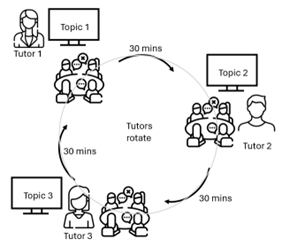
2:00 – 3:45 pm EDUCATION IN PATHOLOGY WORKSHOP – 3 Techniques for Active Learning (An interactive small group workshop. Sign up and BYOD required)
Target Audience: Pathologists who want to elevate their teaching.
Workshop Overview: Many of us still use outdated, ineffective methods like passive lectures and fear inducing questioning. We offer three topics delivered in hands-on small groups to help you incorporate engaging, interactive, and collaborative teaching technologies into your teaching.
You will gain practical skills using free tools to:
- create a Kahoots quiz
- build a digital slide-set using RCPA e-cases
- Develop effective multichoice questions using AI supportParticipant Requirement: You MUST sign up and bring your laptop to participate. Phones/iPads are NOT suitable.
**********************************************
Saturday 30th May 2026
9:50 – 11:45 am SHORT COURSE – EOSPHILIC RENAL NEOPLASMS: Diagnostic tips for Surgical Pathologists in Limited Resource Settings (This session includes a Morning Tea Break from 10.35 – 11.00 am.)
Course Overview: Eosinophilic renal tumours are one of the most challenging areas in surgical pathology. A pathologist’s daily practice is deeply and directly impacted by recent developments in molecular findings in these tumours. This course is intended to create a cost-effective diagnostic algorithm for renal eosinophilic tumours, particularly to the use in the pathology labs with limited resources.
**********************************************
2:55 – 5:10 pm SHORT COURSE – UPDATE ON LIVER TUMOURS in the WHO Classification 6th Edition (This session includes an Afternoon Tea Break from 3.40 – 4.10 pm.)
Course Overview: In the 6th edition of the WHO Classification for Digestive System Tumours (DIG6) there are several refinements to the previous edition which will be discussed in this update. Examples of the topics that will be discussed include:
- The rationale for the division of intrahepatic cholangiocarcinoma (iCCA) into 2 separate entities in DIG6, i.e. large duct iCCA and small duct iCCA
- Additional rare subtypes of iCCA, i.e. solid-tubulocystic (in small duct iCCA), enteroblastic (in large duct iCCA)
- Intraductal tubular papillary neoplasm and intraductal oncocytic papillary neoplasm of the bile ducts
- The subclassification of hepatocellular adenomas, including the addition of sonic hedgehog activated hepatocellular adenoma
- More generally, the role of genomic information and molecular classifications on tumour diagnosis, the WHO Classification and the practical implications for anatomical pathologists.
**********************************************
Sunday 31st May 2026
10:15 – 11:45 am SHORT COURSE – HANDS-ON DIAGNOSTIC STRATEGIES for Squamoproliferative & Undifferentiated Skin Tumours
Course Overview: This short course addresses the diagnostic complexities associated with squamoproliferative lesions and undifferentiated skin tumours. Many pathologists encounter challenges in accurately diagnosing these entities due to overlapping features. This course emphasises a practical approach, incorporating ancillary studies in a rational manner, and highlights common pitfalls to improve diagnostic accuracy.
Key Learning Objectives:
- Improve diagnostic recognition of keratoacanthoma (KA) and squamous cell carcinoma (SCC).
- Differentiate benign mimics of KA and SCC.
- Understand the evolving molecular landscape of ‘undifferentiated’ skin tumours, including AFX, PDS, sarcomatoid SCC and undifferentiated melanoma.
- Utilise immunohistochemistry and molecular studies strategically within the diagnostic workflow.
**********************************************
1:40 – 3:10 pm SHORT COURSE – A STEP-BY-STEP APPROACH FOR PATHOLOGISTS – Part 1
Course Overview: This interactive short course will provide a structured introduction to placental pathology, focusing on the practical skills and knowledge needed for accurate, clinically useful reporting. It will bridge the gap between basic familiarity and confident, methodical examination for those who encounter placentas in general practice but have not had formal training in perinatal pathology.
1:40 – 3:10 pm SPOTLIGHT SESSION – FROM TWEETS TO TRENDS: The Past, Present, and Future of Pathology Social Media
Session Overview: Social media has transformed the way pathologists learn, teach, collaborate, advocate, and connect with colleagues and the public. This Spolight Session will explore the evolution of pathology’s social media presence – from its grassroots beginnings to its current role as a global driver of medical education—and will prepare participants to leverage emerging platforms, technologies, and strategies for maximum professional impact. A special emphasis will be placed on personalized education and the growing role of artificial intelligence in tailoring learning experiences, curating relevant content, and amplifying educational reach. Participants will learn how to integrate AI-powered tools into their social media workflow to create targeted, competency-aligned, and learner-specific content that meets the needs of diverse global audiences.
By the end of the Spotlight Session, participants will be able to:
- Describe the historical development of pathology’s footprint on major social media platforms.
- Identify current best practices for effective and ethical professional engagement online
- Apply platform-specific strategies (X/Twitter, Instagram, LinkedIn, TikTok, YouTube) to meet personal and institutional goals.
- Integrate AI-assisted tools for content creation, analytics, and personalization in pathology education.
- Develop a personal social media plan that aligns with professional identity, educational goals, and institutional guidelines.
1:40 – 3:10 pm SHORT COURSE – UPDATES AND CHALLENGES in Colorectal Pathology
Course Overview: This course will cover the practical reporting of both local and surgical resection specimens with colorectal cancer, emphasising the difficult and controversial areas. Learning objectives are:
- Classify and assess malignant polyps and early colorectal carcinomas using established histopathologic criteria to guide patient management.
- Differentiate key staging and grading features in colorectal carcinoma, including serosal involvement, tumour deposits, and tumour budding, and report them in accordance with current guidelines.
- Interpret histologic findings in post-neoadjuvant specimens, such as residual mucin pools and intramucosal adenocarcinoma, and recommend appropriate staging strategies.
1:40 – 3:10 pm SHORT COURSE – LUNG CANCER DIAGNOSTICS in the Molecular Era
Course OVerview: The landscape of NSCLC is rapidly evolving, with optimal management of patients increasingly dependent on integrated pathology, combining histologic diagnostics with molecular and other biomarkers. This short course is designed for general surgical pathologists and trainees facing challenges in small biopsies with limited tissue and an increasing panel of clinically relevant biomarkers. This will be an interactive case-based discussion of NSCLC cases including review of: Histological subtyping Immunohistochemical workup How and when to apply molecular diagnostics The role of PD-L1 assessment.
**********************************************
1:40 – 3:10pm BOOT CAMP – CYTOLOGY
Course Overview: TBA
**********************************************
3.25 – 4.55 SUNDAY WORKSHOP – DIAGNOSTIC CHALLENGES in Pancreatobilliary Small Biopsy Speciments (with Updates in Classiciation System)
Course Overview: We will use a case-based multimodal approach to discuss the diagnostic workup of solid and cystic pancreatic neoplasms. The workshop aims to enhance the audience’s perspective by correlating cytological/biopsy findings with histological features and offering practical pointers to avoid common diagnostic errors in “common” and “not so common” pancreatic lesions. The interactive approach emphasises active learning and learner-centred discussion to support real-time application of knowledge, critical thinking, and problem-solving skills.
3.25 – 4.55 SHORT COURSE – TRICHOTILLOMANIA NO MORE! Basic Principles and Approach to the Intimidating Aolpecia Biopsy
Course Overview: Alopecia biopsies can be very challenging and intimidating as they are not commonly encountered at public tertiary referral centres, but are fairly common in private skin laboratories. The first part of the course introduces the basic principles and an algorithmic approach to report alopecia. The second part involves case discussion of common and less commonly entities. Registrants will have the opportunity to review scanned slide images prior to the session. The salient and pertinent pathological and clinically relevant features, will be highlighted. At the end of the workshop, participants will improve their confidence in reporting alopecia biopsies.
3.25 – 4.55 SHORT COURSE – EVERYDAY PROBLEMS in Head and Neck Pathology
Course Overview: Everyday problems in head and neck pathology range from evaluating epithelial dysplasia to recognising the morphologic spectrum of mucosal squamous cell carcinoma. Distinction between HPV associated carcinomas and HPV independent carcinomas is critical as treatment may be de-escalated for HPV associated carcinoma. Also, histologic prognostic features such as depth of invasion, patterns of invasion, lymphovascular and perineural invasion and extranodal extension drive adjuvant therapy in head and neck malignancies. This session will include tips and tricks to optimise macroscopic and microscopic examination of head and neck specimens.
3.25 – 4.55 SHORT COURSE – UPDATE AND KEY TOPICS in Renal pathology
Course Overview: This course will address clinically important areas for practicing renal pathologists and general surgical pathologists by well-known international experts. This will include an overview of the topic with illustrative case discussions and differential diagnosis. Participants will be able to interact with experts and discuss difficulties in the subject areas as they encounter in routine practice as well as gain practical and clinically relevant tips in approaching diagnostic difficulties.
**********************************************
3:25 – 4:55 pm BOOT CAMP – SMALL BIOPSY EXAM
Course Overview: A slide-based revision for the small biopsy exam, with cases covering frozen section, immunohistochemical studies and common small biopsy cases from different organ systems encountered in daily practice. The aim is to go through as many cases as possible within 90 minutes with brief recap of saliant features.